Service Pages vs Location Pages: Which Does Your Site Need?
Expert reviewed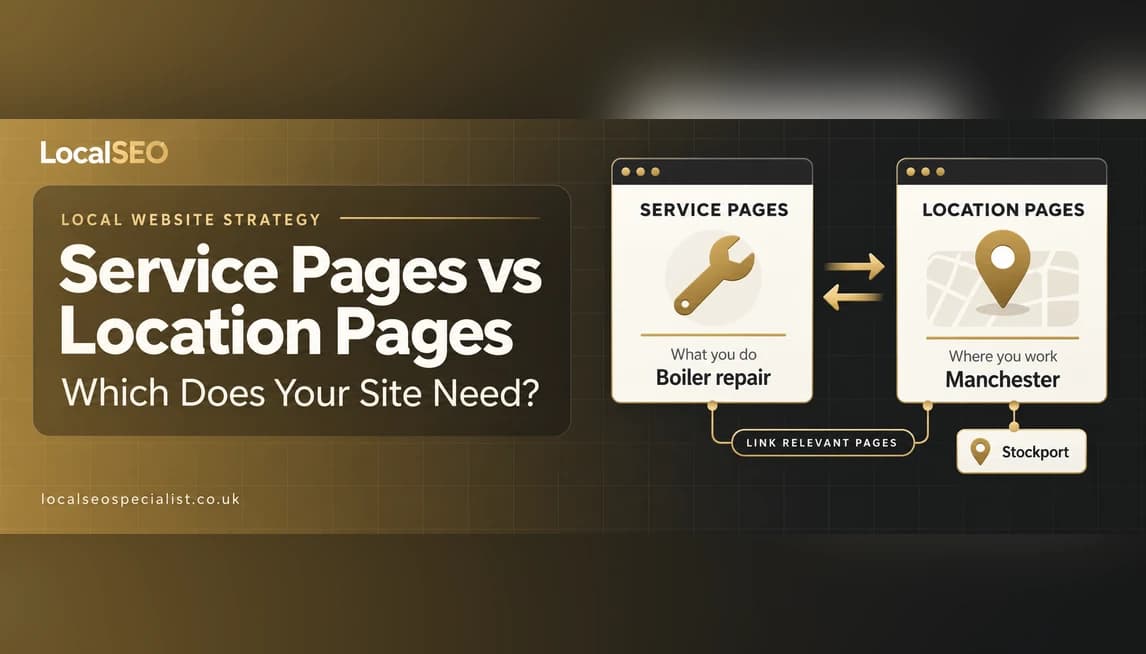
A plain-English guide to service pages and location pages, when to use each, and how to structure them together so you rank locally without thin, duplicate content.
Most local businesses need both, but not in equal amounts. You need a strong service page for every core service you sell, and you only need location pages for the towns and cities you genuinely want to rank in and can write about with real detail. If you serve one town from a shop, service pages plus a well optimised Google Business Profile often do the job on their own. If you travel to several towns, that is when location pages start to earn their place.
The confusion usually comes from treating the two page types as the same thing. They are not. A service page answers what you do. A location page answers where you do it. They target different searches, they sit in different places in your site architecture, and they carry very different risks. Get the split wrong and you either miss easy rankings or you flood your site with thin, near identical pages that Google ignores.
In this guide we explain what each page is, how they map to search intent, when a business actually needs location pages, and how to link the two together so they support each other. We also share our own estimate of how many local businesses really need location pages, and we walk through a worked UK example with real looking URLs so you can copy the structure.
Key takeaways
- A service page targets what you do, a location page targets where you do it, and most local sites need several service pages but only a handful of location pages.
- Location pages earn their place when you serve multiple towns and can write genuinely different, useful content for each one.
- If you serve a single area from a shopfront, strong service pages and a Google Business Profile are often enough on their own.
- The biggest risk with location pages is thin, near duplicate content, so build fewer pages with real local detail rather than many spun copies.
- Service pages and location pages should link to each other through a clear silo structure, not sit in isolation.
On this page
How we decide which pages a site needs
When a new client asks whether they need location pages, we do not guess. We work through a short checklist that looks at how the business actually operates and what people search for. The aim is to build the fewest pages that cover the full demand, not to pad the site.
- 1We map every core service the business sells, because each one needs its own service page.
- 2We check whether the business serves customers at one address or travels to them across several towns.
- 3We run local keyword research to see which town plus service searches have real volume and are worth a page.
- 4We ask whether the team can supply genuine local detail for each area, such as jobs done, response times, and landmarks.
- 5We only recommend a location page where both the search demand and the real content exist.
Our estimate, not a study
Any numbers we share below come from our own client work across UK trades and service businesses. Treat them as experience based estimates, not published research.
What is a service page?
A service page is a page dedicated to one thing you do. Boiler repair. Emergency electrician. End of tenancy cleaning. Its job is to explain that single service in depth, answer the questions a buyer has, and give them a clear reason to call you rather than the next firm in the results.
A good service page targets the core search for that service, such as boiler repair or emergency plumber. It covers what the service includes, common problems you fix, how pricing works, how fast you respond, and proof that you are trustworthy. This is where most of your on-page SEO effort should go, because these pages match the searches that bring in paying work.
As a rule, you need one service page per core service, and you should resist merging several services onto one page. A single thin page that lists ten services will almost always be beaten by ten focused pages, each answering one clear question.
What is a location page?
A location page targets a place. It exists to help you rank for searches that combine a service and a town, such as boiler repair Manchester or emergency electrician Leeds. Its job is to prove you genuinely serve that area and to give a searcher in that town a page that feels written for them.
The mistake most sites make is treating location pages as filler. They take the service page, swap the town name, and publish twenty copies. Google sees straight through this. A strong location page includes real local detail, jobs you have done nearby, the areas and postcodes you cover, response times to that town, and local reviews. That is what separates a page that ranks from one that gets ignored.
Location pages are also where your Google Business Profile and your website work together. The profile drives the map pack, and your location pages support the standard organic results for the same town plus service searches.
Service pages vs location pages: the core difference
The simplest way to see the difference is side by side. Service pages answer what you do and win the broad, high intent searches. Location pages answer where you do it and win the town specific searches. They are partners, not rivals, and they carry very different risks.
| Factor | Service page | Location page |
|---|---|---|
| What it targets | A single service you offer | A single town or area you serve |
| Search intent | I need this service done | I need this service in this place |
| Best for | Every business with distinct services | Businesses serving several towns |
| Main risk | Merging too many services onto one page | Thin, near duplicate pages across towns |
| Example URL | /services/boiler-repair | /locations/manchester |
Read the table as a pairing. Someone searching boiler repair lands on your service page. Someone searching boiler repair Manchester should land on a page that combines the service and the place, which is where your location pages come in.
When your business needs location pages
Location pages are worth building when you serve more than one town and want to rank in each of them. This is common for a service area business that travels to customers, such as a plumber covering Greater Manchester or an electrician working across West Yorkshire. If you can genuinely serve a town and can describe that work, a location page gives you a page to rank.
- You need location pages if you travel to customers across several distinct towns or cities.
- You need location pages if town plus service searches have real volume in local keyword research.
- You need location pages if you can write genuinely different, useful content for each area.
- Service pages are enough if you serve a single town from one address.
- Service pages are enough if your extra towns have almost no search demand.
- Service pages are enough if you cannot supply real local detail and would only be swapping the town name.
One honest test
Before you build a location page, ask whether you could write three true paragraphs about your work in that specific town without mentioning any other place. If you cannot, you are not ready for that page yet.
When service pages alone are enough
Plenty of businesses never need location pages at all. If you run a shop, a salon, a garage, or a clinic from one address, and you serve the town around you, your strongest local asset is a well optimised Google Business Profile paired with clear service pages. The profile carries your address and drives the map pack, and your service pages carry the depth.
In these cases, adding a stack of location pages for nearby villages usually does more harm than good. You spread thin content across pages nobody searches for, and you dilute the authority that should sit on your service pages. Time spent improving one excellent service page almost always beats time spent spinning up five weak location pages.
The signal to watch is search demand. If nobody is searching your service plus a nearby town, that town does not need a page. Let your service pages and your profile do the work, and only add location pages when the demand is real.
The thin and duplicate content risk
This is where most location page projects go wrong. A business decides it wants to rank in thirty towns, takes one template, changes the town name thirty times, and publishes. Every page is ninety five per cent identical. Google treats these as thin, low value pages, and often none of them rank. Worse, they can drag down the pages that would have ranked.
The fix is not clever wording. It is real information. Each location page should carry details that only apply to that town: named jobs you have completed there, the neighbourhoods and postcodes you cover, your typical response time to that area, local reviews, and any local context that matters. If two of your location pages could swap town names without anyone noticing, they are too thin.
Fewer, richer pages win
Ten location pages with genuine local detail will nearly always outperform fifty spun copies. Build only the pages you can fill with real content.
- Include named local jobs and case snippets.
- List the specific areas and postcodes you cover.
- Add reviews from customers in that town.
- Give a real response time for that area.
How many location pages to build
There is no fixed number, but there is a sensible ceiling. Build a location page for each town where you have both real search demand and real content to offer. For most UK service businesses we work with, that means a handful of pages, not dozens. It is far better to own five towns properly than to sit invisible in thirty.
The chart above reflects our own client mix across UK trades and service businesses, so treat it as an estimate rather than published research. The point it makes is simple. Only a small share of businesses genuinely need location pages at scale. Most either need none, or need a focused set covering the towns that actually matter to them.
Site architecture and internal linking
Service pages and location pages only work well when they are connected. The cleanest approach is a simple silo. Keep your services in one folder and your locations in another, then link them so each supports the other. This helps searchers and search engines understand what you do and where.
A worked example for a Manchester plumber
- /services/boiler-repair is the service page targeting boiler repair.
- /services/emergency-plumber is the service page targeting emergency plumber.
- /locations/manchester is the location page targeting Manchester.
- /locations/stockport is the location page targeting Stockport.
Now link them together. Each service page links out to the location pages, using clear phrasing such as we offer boiler repair across Manchester and Stockport. Each location page links back up to the relevant service pages, so a visitor on the Manchester page can jump straight to boiler repair or emergency plumber. Your main navigation lists the core services, and a services or areas menu exposes the location pages.
Link with intent
Use descriptive anchor text that names the service and, where it fits, the town. This tells Google exactly how your pages relate and keeps the internal linking natural rather than forced.
Putting it together for a real UK site
Imagine an electrician based in Birmingham who also covers Wolverhampton and Solihull. They sell three core services: emergency callouts, fuse box upgrades, and EV charger installation. That gives three service pages, one per service, each written in depth.
Their local keyword research shows steady demand for their services plus Birmingham, plus Wolverhampton, and plus Solihull, so three location pages make sense. Each location page carries real jobs done in that town, the postcodes covered, local reviews, and a genuine response time. The service pages link out to all three towns, and each location page links back to the three services. The Google Business Profile sits at the centre of the map pack for Birmingham.
That is a complete, tidy structure: three service pages, three location pages, and clear internal linking between them. No thin filler, no spun copies, and every page earns its place. If you are unsure where your business sits, a local SEO specialist can map your services and towns against real search demand before you build a single page.
Service pages vs location pages: FAQs
Do I need both service pages and location pages?
Most local businesses need several service pages and only a small set of location pages. Service pages cover what you do and should exist for every core service. Location pages cover where you do it and are only worth building for towns where you have real search demand and real content to offer.
Can location pages hurt my SEO?
They can, if they are thin and near identical. Publishing many pages that only differ by town name is treated as low value content and can drag down your stronger pages. Build fewer location pages, each with genuine local detail, and the risk disappears.
How many location pages should a small business have?
Only as many as you can fill with real content and justify with search demand. For most UK service businesses that means a handful, not dozens. It is better to rank properly in five towns than to sit invisible across thirty thin pages.
What is the difference between a service page and a location page?
A service page targets what you do, such as boiler repair, and wins the broad service search. A location page targets where you do it, such as boiler repair Manchester, and wins the town specific search. They target different intents and should link to each other.
If I only serve one town, do I need location pages?
Usually not. If you serve a single area from one address, strong service pages and a well optimised Google Business Profile are normally enough. Add location pages only when you start serving other towns that have real search demand.
How should I link service pages and location pages together?
Use a simple silo. Keep services in one folder and locations in another, then link each service page out to the relevant location pages and each location page back to the relevant services. Use clear anchor text that names the service and, where it fits, the town.

Nazir helps UK businesses get found in Google Maps, the local pack and AI search. He writes practical local SEO guides based on hands-on experience with real campaigns.
Editorial process: every guide is researched and written by a local SEO specialist, reviewed by Javed Iqbal, and checked for accuracy before it is published.
More guides
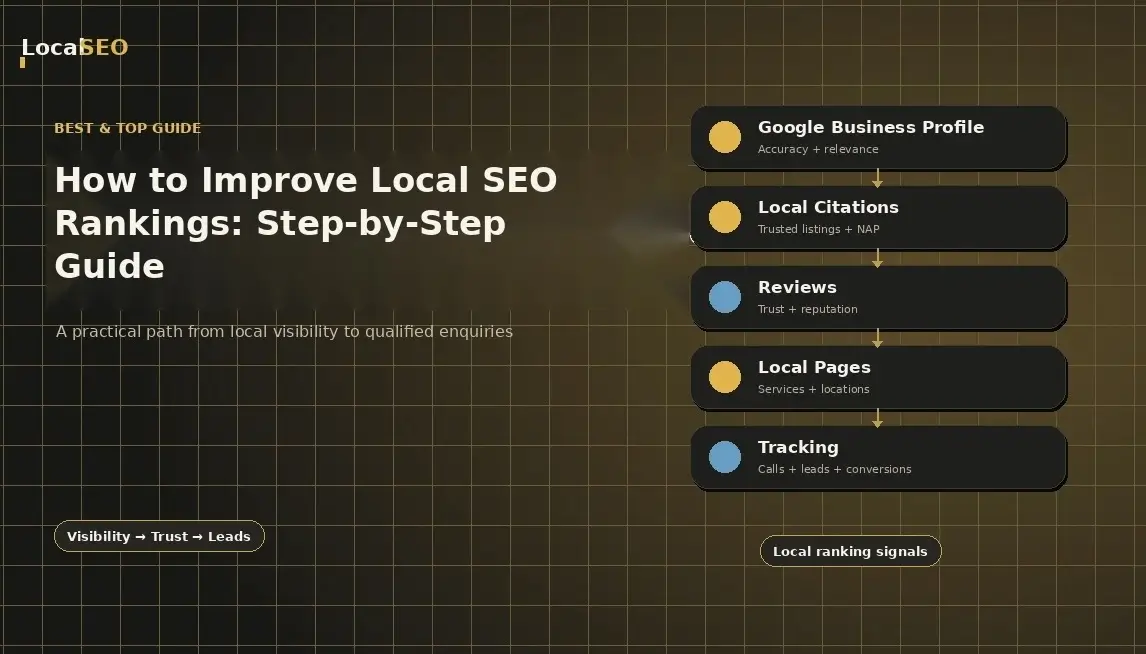
How to Improve Local SEO Rankings: Step-by-Step Guide
People in your area are already searching for the products and services you sell. The problem is that they may never find you.
Read the guide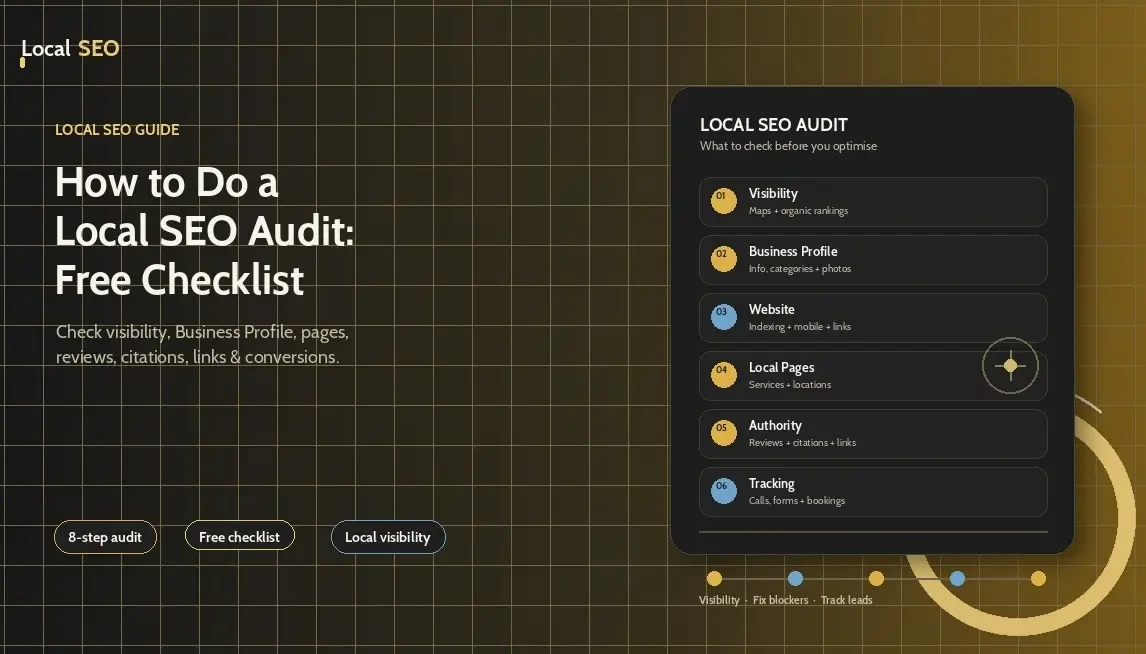
How to Do a Local SEO Audit: Free Checklist
A local SEO audit shows you what is helping a business appear in local search, what is holding it back, and what needs fixing first. It looks beyond rankings and checks the full path from a Google search to a call, booking, form submission, or store visit.
Read the guide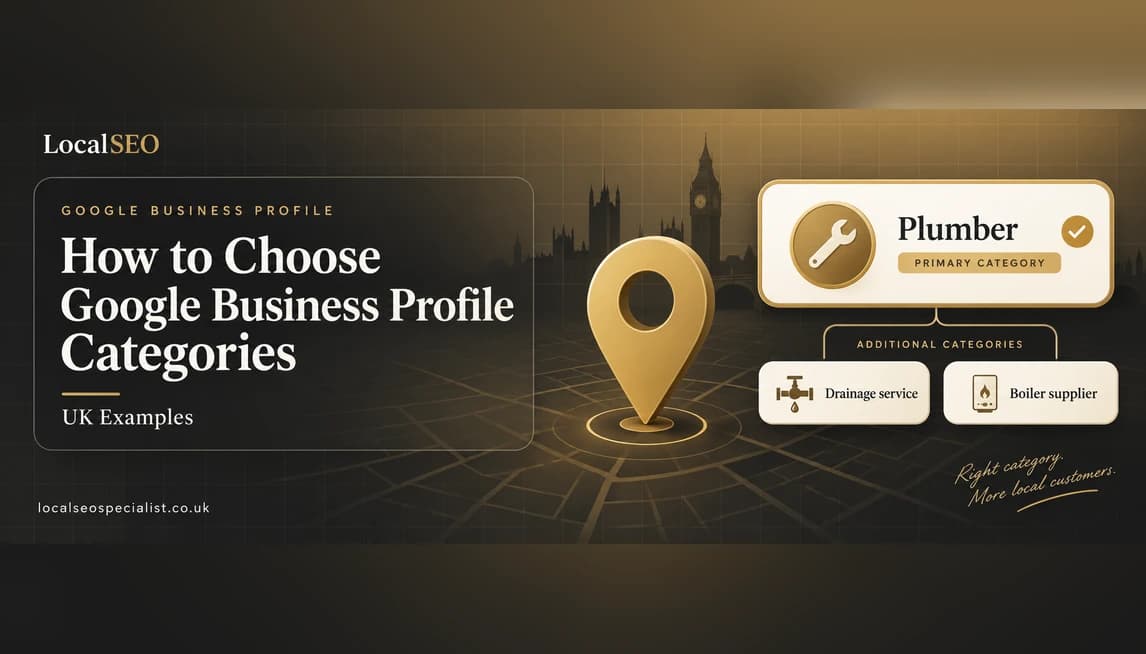
How to Choose Google Business Profile Categories (UK Examples)
A plain, senior guide to choosing the right primary and additional Google Business Profile categories, with UK trade examples and the mistakes to avoid.
Read the guideSee exactly where you're losing local customers
Get a free, no-obligation local SEO audit and a clear plan to climb the map pack.
- A clear picture of where you rank locally today
- The quickest wins to climb the map pack
- How you compare to nearby competitors
- No obligation, no hard sell
Prefer to talk? Call us directly.
+44 7423 614766