How to Improve Local SEO Rankings: Step-by-Step Guide
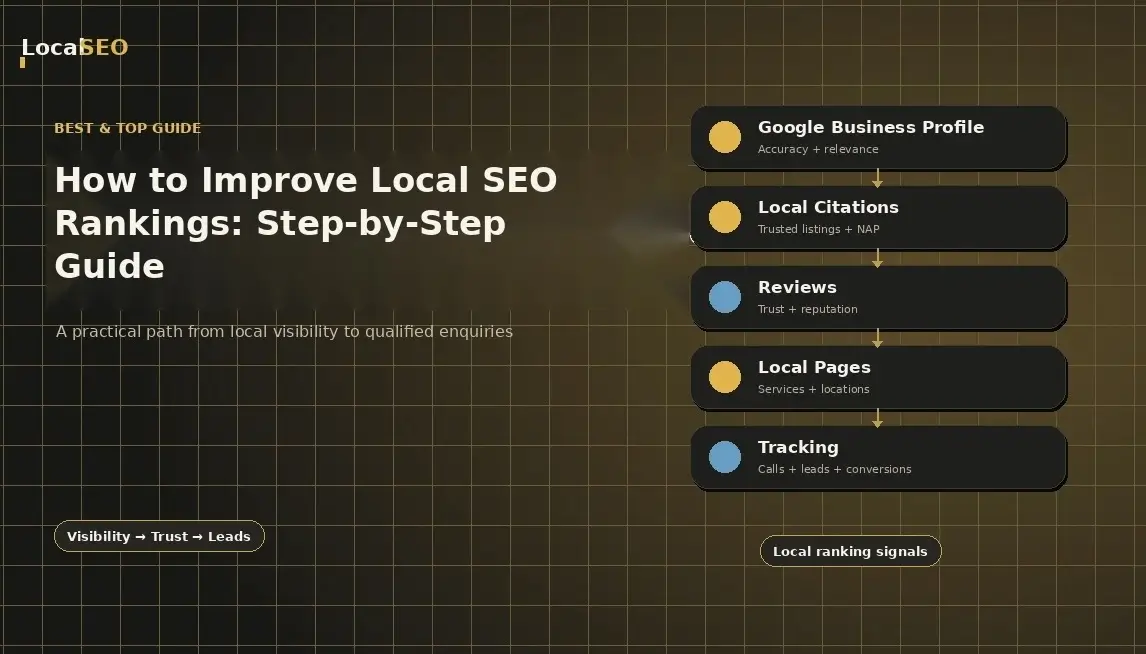
People in your area are already searching for the products and services you sell. The problem is that they may never find you.
Learning how to improve local SEO rankings means making your business easier to find in Google Search and Google Maps when someone nearby needs what you offer. That takes more than adding a city name to a web page. Your Business Profile, website, reviews, local listings, authority, and location signals all play a part.
This local SEO guide breaks the work into clear steps so you can see what deserves attention first and what can wait.
On this page
What Is Local SEO?
Local SEO is the process of improving a business's visibility when people search for products or services in a particular area. It can help a business appear in normal Google results, Google Maps, the Local Pack, “near me” searches, and searches that include a town, city, or neighborhood.
Think about someone searching for “emergency electrician near me” at 8 p.m. They are probably not looking for an electrician on the other side of the country. Google needs to work out which nearby businesses match that need.
Local SEO gives Google better information to make that match. A major part of that visibility comes from your Google Business Profile, which controls how key business information can appear across Google Search and Maps.
It matters for shops, clinics, restaurants, tradespeople, professional services, and businesses that cover defined service areas without serving customers from a traditional storefront.
How Is Local SEO Different From Traditional SEO?
Traditional SEO focuses mainly on improving a website's visibility for relevant searches. Local SEO adds another layer: where the business is located and whether it is a suitable result for someone searching in that area.
That brings Google Business Profile, location relevance, customer reviews, local citations, NAP accuracy, and location pages into the picture.
A national online store might care little about whether the searcher is two miles away. A dentist, salon, plumber, or s café certainly does. That location difference changes the whole job.
Why Is Local SEO Important for Businesses?
The importance of local SEO comes down to timing. Local searches often happen when someone already has a need and is deciding who to contact, visit, or buy from.
In a 2026 BrightLocal study, 84% of consumers said they had searched online for a local business within the previous three months. Three-quarters used more than one channel during their most recent local search.
That helps answer why is local SEO important: it puts your business in front of people while they are actively looking. This is especially useful for local SEO for small businesses, where visibility in a limited service area can directly affect calls, visits, and enquiries.
Reach People Searching Nearby
Local SEO connects a business with customers in the area it can actually serve.
A search for “Thai restaurant,” “car repair near me,” or “estate agent Bristol” carries a local need even when the person doesn't spell out exactly how close the business should be.
Showing up at that point puts you in the consideration set before a customer has chosen anyone.
Attract More Qualified Leads
A nearby search usually has stronger commercial intent than a broad informational search.
Someone reading about how boilers work may be researching. Someone searching “boiler repair Leeds” probably has a problem that needs fixing.
That difference matters. Local visibility can bring fewer irrelevant visits and more calls, bookings, direction requests, and enquiries from people who can genuinely become customers.
Build Trust in Your Area
Local search results expose more than a business name.
People can see reviews, hours, photos, contact details, location information, and recent activity before visiting your website. In BrightLocal's 2026 review study, 97% of respondents said they read reviews for local businesses.
Accurate information and a healthy review profile make the business feel active and easier to trust.
Compete More Effectively With Nearby Businesses
Good SEO for local business gives smaller companies a real chance to compete where proximity and relevance matter.
A large company does not automatically deserve the local result. If another business has a better match for the search, stronger local information, useful pages, credible links, and a well-maintained Business Profile, it can earn better visibility.
That is why the basics deserve attention before flashy tactics do.
What Factors Affect Local SEO Rankings?
Google says local results are mainly based on relevance, distance, and prominence. These factors help Google decide which businesses are useful for a particular local search.
If you want to understand these signals in more detail, our guide to local SEO ranking factors explains how relevance, distance, prominence, reviews, links, and other local signals work together.
You cannot control every part of that equation. You can, however, give Google clearer evidence about what your business does, where it operates, and why it deserves to be trusted.
Relevance
Relevance measures how closely a business matches what someone searched for.
A complete Business Profile helps Google understand your services, category, location, and other details. Your website adds context through service pages, headings, copy, internal links, and supporting information.
The clearer that connection is, the easier it becomes for Google to understand suitable searches for the business.
Distance
Distance concerns how far a business is from the searcher or from the location used in the search.
If Google knows the person's location, that can influence which nearby businesses appear. If the searcher does not provide a location directly, Google can use the location information available to it.
You cannot SEO your way out of being thirty miles away from a searcher who needs something nearby.
Prominence
Prominence is Google's way of judging how well-known and established a business appears.
Google specifically mentions signals such as links from other websites, reviews, and review ratings when explaining prominence.
Your wider web presence matters here too. Mentions on reputable local sites, relevant business directories, useful website content, press coverage, and genuine customer feedback can all build a stronger picture of the business.
Prominence usually grows over time. That is one reason local SEO rewards consistent work better than random bursts of activity.
How to Improve Local SEO Rankings Step by Step
The best way to understand how to improve local SEO rankings is to work through the signals in a sensible order.
Do not start by chasing backlinks if your Business Profile has the wrong phone number. Do not create twenty location pages before checking whether anyone searches for those services in those areas.
Fix the foundation first.
Step 1: Audit Your Current Local SEO Performance
Start by finding out what is already working and where visibility is being lost.
Check your local rankings, Google Maps presence, Business Profile, main website pages, customer reviews, citations, NAP details, and the businesses currently outranking you.
Search for your important services from the areas you serve. Look at who appears in Maps and normal results. Compare their categories, reviews, pages, content depth, and general local presence with yours.
An audit stops you from fixing the wrong thing.
A business sitting fourth in Maps with strong pages but weak reviews has a different problem from one whose Business Profile still lists an old address.
Step 2: Research Local Keywords
Local keyword research starts with the language customers actually use.
For a plumber in Manchester, that could include “plumber Manchester,” “emergency plumber Manchester,” “plumber near me,” neighborhood searches, repair-specific phrases, and broader queries where Google understands the local intent without a place name.
Look at four useful patterns:
- service + city
- service + neighborhood
- product + location
- searches where local intent is understood from context
Separate explicit searches, such as “dentist Birmingham,” from implicit ones such as “dentist near me.”
Search volume helps, but relevance matters more. Ten enquiries from a precise service query can be worth far more than hundreds of visits from people looking for general information.
Where Should You Use Local Keywords?
Use relevant local terms in page titles, headings, URLs, meta descriptions, service copy, and supporting content where they read naturally.
Do not force the city name into every paragraph.
Google needs clarity. Readers need normal English. You can satisfy both.
Step 3: Optimize Your Google Business Profile
Your Google Business Profile can influence whether customers find you in Search and Maps, which is why proper Google Business Profile optimization deserves ongoing attention.
Verify the profile first. Then check the business name, primary category, additional categories where appropriate, address or service area, phone number, website, opening hours, services, products, description, and relevant attributes.
Google says complete and accurate business information makes a profile more likely to appear for relevant local searches.
Photos deserve attention too. Use real images that help customers understand the business rather than filling the profile with generic graphics.
Keep holiday hours and temporary changes updated. Review the profile after a move, rebrand, phone number change, or service change.
The common mistake is treating optimization as a one-day job. Business information changes. Your profile needs to change with it.
Step 4: Keep Your NAP Details Consistent
NAP means Name, Address, Phone Number.
Those details should be accurate anywhere customers or search engines may find the business. Check your website, Google Business Profile, social accounts, major directories, industry listings, and citation sources.
Consistency does not mean obsessing over harmless formatting differences while ignoring real errors.
An old phone number is a problem. A previous address is a problem. A duplicate listing for a location you left two years ago is a problem.
Focus on information that could genuinely confuse Google or a customer.
Step 5: Build and Fix Local Citations
A local citation is an online mention of your business information, usually including its name, address, and phone number.
Regular local citation building can also help strengthen your business information across trusted local and industry sources.
Start with directories that people or search engines actually trust. Add important local business listings, relevant industry directories, and established platforms used in your market.
Then clean up old data.
Merge or remove duplicate profiles where the platform allows it. Correct outdated addresses and phone numbers. Claim important listings so future information can be managed properly.
Quality beats volume here. Creating hundreds of listings on sites nobody uses is a poor use of time.
A smaller group of accurate, relevant citations is far more useful than a pile of directory spam.
Step 6: Optimize Your Website for Local Search
Your website gives Google information that a Business Profile cannot fit into one listing.
Make important service pages clear about what you offer and where you offer it. Use descriptive titles, sensible H1 and H2 headings, useful service copy, contact details, internal links, image alt text where relevant, and calls to action that help visitors take the next step.
Strong local SEO strategies connect those elements instead of treating them as separate tricks.
A roofing company covering several towns might have a strong roofing-services page, supporting location pages, project examples, customer questions, and easy contact options.
That gives search engines context. More importantly, it gives potential customers enough information to make a decision.
Step 7: Create Useful Location and Service Pages
Businesses covering several locations may need separate pages where the search demand and service differences justify them.
Each page should offer something useful about that area. Explain the services available, coverage, relevant local details, contact options, customer feedback where appropriate, and questions people in that location may ask.
The page should still make sense if the city name were hidden.
That is a good test.
Avoid Thin or Duplicate Location Pages
Do not create fifty pages by changing “Manchester” to “Liverpool” while leaving every other sentence untouched.
Those pages add little value and usually feel poor to readers as well.
Give each location page a reason to exist. Different service coverage, local examples, office information, delivery details, regulations, customer questions, or genuinely useful local knowledge can create that reason.
If you have nothing unique to say about a location, one stronger regional page may be the better choice.
Step 8: Earn and Manage Customer Reviews
Ask genuine customers for honest reviews at sensible moments in the customer journey.
Google allows businesses to request reviews and even provides review links and QR codes. It does not allow businesses to pay for reviews, offer discounts in exchange for them, or selectively pressure customers into leaving positive feedback.
Make the process easy. Send the review link after a completed service, include it in a suitable follow-up message, or display a QR code where it fits naturally.
Respond to feedback as well. A thoughtful reply shows future customers that somebody is paying attention.
Recent feedback matters to buyers. BrightLocal found that 74% of consumers in its 2026 survey cared only about reviews written within the previous three months.
Do Reviews Help Local SEO?
Yes. Google says review count and positive ratings can contribute to local ranking, while reviews also help potential customers judge whether they trust the business.
That does not make review manipulation clever. Fake or incentivized reviews can be removed, and Google can place restrictions on Business Profiles that violate its fake-engagement rules.
Step 9: Build Relevant Local Backlinks
A backlink is simply a link from another website to yours.
For local SEO, useful opportunities can come from local organizations, chambers of commerce, suppliers, community groups, local media, business partners, sponsorships, and relevant industry websites.
Do not judge a link only by a metric in an SEO tool.
Ask whether the source is credible and whether the connection makes sense. A link from a respected local organization that genuinely knows your business can say more than dozens of random placements on low-quality sites.
Local link building often works best when it begins with real business relationships rather than cold outreach to strangers.
Step 10: Improve Mobile Experience and Technical SEO
Local customers often search away from a desktop, so strong technical SEO services should make sure the site loads quickly, works properly on mobile, and can be crawled without problems.
Test key pages on real mobile screens. Check load speed, Core Web Vitals, HTTPS, navigation, crawlability, forms, and click-to-call buttons.
Keep the practical goal in mind. A customer should be able to find your phone number, understand your service, check where you operate, and contact you without fighting the page.
Google recommends good Core Web Vitals and an overall strong page experience, although good technical scores alone do not guarantee high rankings.
Technical SEO should remove obstacles. It should not become a month-long hunt for a perfect score while obvious customer problems stay unfixed.
Step 11: Add Local Business Schema
LocalBusiness structured data gives search engines machine-readable information about a local business.
Depending on the business and markup used, structured data can describe details such as the business type, address, phone number, website, and opening hours. Google's LocalBusiness documentation supports properties for these kinds of details.
Keep the markup consistent with what visitors can actually see on the site.
Schema helps search engines understand information. It does not create an automatic ranking boost, so fix your real business information before worrying about markup.
Step 12: Track Local SEO Performance
Local SEO becomes much easier to manage once you stop judging success from one keyword.
Track important local queries, Maps visibility, organic traffic, calls, forms, direction requests, leads, sales, and meaningful Business Profile interactions.
Google Search Console shows search impressions, clicks, queries, click-through rate, and position data for your website.
Google Business Profile performance can show searches, views, calls, website clicks, direction requests, and other available interactions for verified profiles.
Google Analytics can then help you measure important on-site actions as key events and conversions where your setup supports them.
Measure business outcomes alongside rankings. Moving from position seven to position four sounds nice, but ten extra qualified enquiries tell you much more.
If these twelve steps expose several weak areas at once, fix the issues closest to the customer first. Wrong information, broken pages, weak service coverage, and neglected profiles deserve attention before minor SEO tweaks.
What Are the Most Important Local SEO Best Practices?
The most important local SEO best practices are the habits that keep your business information accurate, locally relevant, trustworthy, and easy for customers to use.
Use this checklist:
- 1Keep your Google Business Profile accurate and active.
- 2Target search terms that reflect real local demand.
- 3Keep NAP information consistent across important sources.
- 4Build and maintain trusted local citations.
- 5Create genuinely useful service and location pages.
- 6Ask real customers for honest reviews.
- 7Earn relevant backlinks from credible websites.
- 8Keep the website fast and easy to use on mobile.
- 9Monitor rankings, traffic, calls, enquiries, and profile activity.
None of these jobs is particularly mysterious.
The businesses that struggle often do not need a secret tactic. They need to stop leaving basic work half-finished.
What Local SEO Mistakes Can Hurt Rankings?
Several local SEO mistakes can weaken visibility, create trust problems, or put a Business Profile at risk.
Watch for these:
- Stuffing city names and keywords into unnatural copy.
- Adding keywords to the Business Profile name when they are not part of the real-world business name.
- Choosing categories that do not accurately describe the business.
- Leaving duplicate Business Profiles active.
- Using different phone numbers or outdated addresses across important listings.
- Buying fake reviews or rewarding customers for positive ones.
- Publishing dozens of near-identical location pages.
- Forgetting to update opening and holiday hours.
- Submitting the business to large numbers of poor-quality directories.
- Making mobile users pinch, zoom, hunt for contact details, or complete awkward forms.
Google's Business Profile rules require businesses to represent themselves accurately, and fake engagement can lead to review removals or profile restrictions.
The safest local SEO usually looks boring from the outside. Accurate information, useful pages, genuine reputation, and steady maintenance keep winning because they solve real problems.
Should You Do Local SEO Yourself or Hire a Local SEO Service?
You can manage local SEO yourself when the business is simple enough to monitor properly. Businesses dealing with stronger competition, several locations, or persistent ranking problems may benefit from professional local SEO services. A professional service becomes more useful when the workload, competition, or technical problems grow beyond what your team can handle consistently. A local SEO specialist can be useful when the business needs deeper help with Maps visibility, citations, local pages, reviews, or ongoing performance tracking.
That is the decision to make before paying for any local search optimisation service.
When Can You Manage Local SEO Yourself?
A single-location business in a smaller market can often handle much of the basic work internally.
Someone still needs to own the job. That person can maintain the Business Profile, request reviews, update the website, correct important listings, monitor performance, and make sure business information stays accurate.
DIY local SEO works best when there are few locations, a limited service area, moderate competition, and enough internal time to keep the work moving.
If nobody has time to check it for six months, it is not really being managed.
When Should You Consider Professional Local SEO Solutions?
Professional local SEO solutions become more useful when the business operates across several locations, competes in a crowded market, has messy citation data, or cannot gain meaningful Maps visibility despite doing the basics correctly.
Outside help can also make sense when technical SEO, link building, content planning, reporting, or multi-location management requires skills the internal team does not have. A local SEO consultant can also help identify which problems deserve attention first instead of spreading time and budget across every possible tactic.
Do not hire a local SEO agency simply because SEO sounds complicated.
Compare local SEO packages based on the work included rather than choosing solely by price. Hire support when the cost of learning, managing, and fixing everything internally is higher than the value of bringing in specialists.
And avoid anyone promising a guaranteed first position in local results. Google itself says businesses cannot request or pay Google for a better organic local ranking.
Businesses with repeated ranking problems may also bring in a local SEO expert to review the setup and find issues the internal team has missed.
How Long Does It Take to Improve Local SEO Rankings?
There is no universal timeline for improving local SEO rankings.
A business with an incomplete profile and obvious listing errors may see changes sooner than a company trying to move through a highly competitive city where established competitors already have strong websites, reviews, links, and local recognition.
Your starting position matters.
So do competition, website quality, Business Profile accuracy, review strength, location, backlinks, existing technical problems, and how much useful work has already been done.
Judge progress over a meaningful period rather than checking one keyword every morning.
Look for movement across rankings, visibility, traffic, calls, enquiries, and conversions. One metric rarely tells the whole story.
What Is the Best Long-Term Local SEO Strategy?
The best long-term approach is to research what your local customers are searching for, optimize your online presence around those needs, build trust through reviews and accurate business information, monitor your performance, and keep improving based on the results.
Good local SEO strategies work as a cycle rather than a one-time campaign.
Search behavior changes. Competitors improve their profiles and websites. New reviews arrive. Staff, services, opening hours, addresses, and service areas change. Rankings move too.
Your local presence has to keep up.
Research what customers need. Improve the weak areas. Build trust through useful content, accurate information, genuine reviews, citations, and relevant authority. Then measure what happened and decide what deserves attention next.
The businesses that keep doing that have a much stronger foundation than those that disappear for a year after completing an SEO checklist.
Is Local SEO Worth Investing In?
Yes. Local SEO is worth investing in when customers search online for businesses like yours in the areas you serve.
Learning how to improve local SEO rankings can lead to stronger visibility in Google Search and Maps, greater trust, more qualified website visits, and more opportunities for calls and enquiries.
The biggest advantage is that the work builds on itself. A better profile supports discovery. Better pages answer customer questions. Reviews build confidence. Relevant links strengthen authority. Accurate listings reduce confusion.
Do not try to fix everything at once.
Start by auditing your Google Business Profile, local rankings, website, and business listings. Find the biggest gap, fix it properly, then move to the next one.
FAQs
What is local SEO?
Local SEO is the work used to improve a business's visibility for searches connected to a particular location or service area. It can affect visibility in Google Search, Google Maps, the Local Pack, “near me” searches, and queries that include a city or neighborhood. It is especially useful for businesses that serve customers in physical locations or defined geographic areas.
Why is local SEO important?
Local SEO matters because many people search online shortly before choosing a nearby business. BrightLocal reported in 2026 that 84% of consumers had searched online for a local business during the previous three months. Better visibility gives your business more chances to appear while those customers are deciding where to call, visit, book, or buy.
How can I improve my local SEO rankings?
Start with your Google Business Profile, local keyword research, NAP accuracy, citations, website pages, customer reviews, relevant backlinks, mobile performance, and tracking. Work from the biggest problem down. Fixing inaccurate business information usually deserves attention before advanced tactics such as schema or large-scale link campaigns.
What are the three main local SEO ranking factors?
Google says its local results are mainly based on relevance, distance, and prominence. Relevance is how closely the business matches the search. Distance considers how close it is to the searcher or searched location, while prominence reflects how well-known and established the business appears.
Do Google reviews help local SEO?
Yes. Google states that review count and positive ratings can help a business's local ranking. Reviews also affect customer decisions. BrightLocal's 2026 research found that 31% of consumers would only use businesses with ratings of at least 4.5 stars, while 74% focused on reviews from the previous three months.
Can I do local SEO myself?
Yes, especially if you run one location, cover a manageable service area, and have enough time to maintain the work. Google Business Profile updates, review requests, citation corrections, basic keyword research, and website improvements can all be handled internally. Professional support becomes more useful when the business has several locations, stronger competition, technical issues, or limited internal capacity.
How often should local SEO be updated?
Local SEO should be monitored throughout the year rather than treated as an annual task. Update business information whenever something changes. Reviews and customer feedback deserve regular attention, while rankings, website performance, Business Profile interactions, calls, enquiries, and local competitors should be checked often enough to spot meaningful changes before they become bigger problems.

Nazir helps UK businesses get found in Google Maps, the local pack and AI search. He writes practical local SEO guides based on hands-on experience with real campaigns.
Editorial process: every guide is researched and written by a local SEO specialist and checked for accuracy before it is published.
More guides
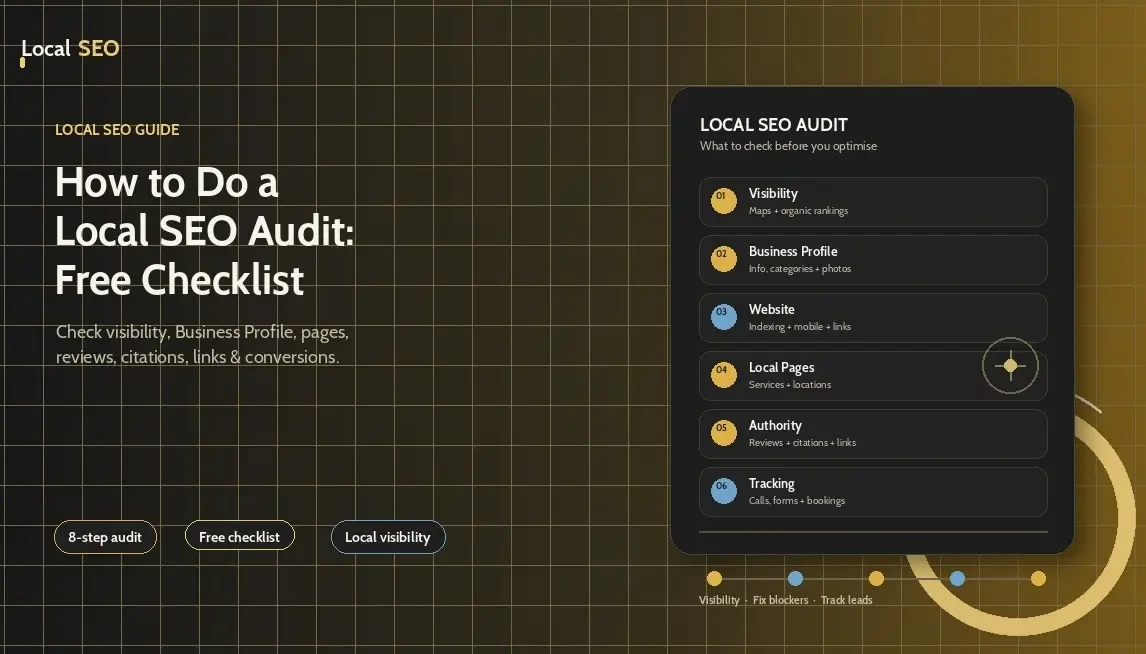
How to Do a Local SEO Audit: Free Checklist
A local SEO audit shows you what is helping a business appear in local search, what is holding it back, and what needs fixing first. It looks beyond rankings and checks the full path from a Google search to a call, booking, form submission, or store visit.
Read the guide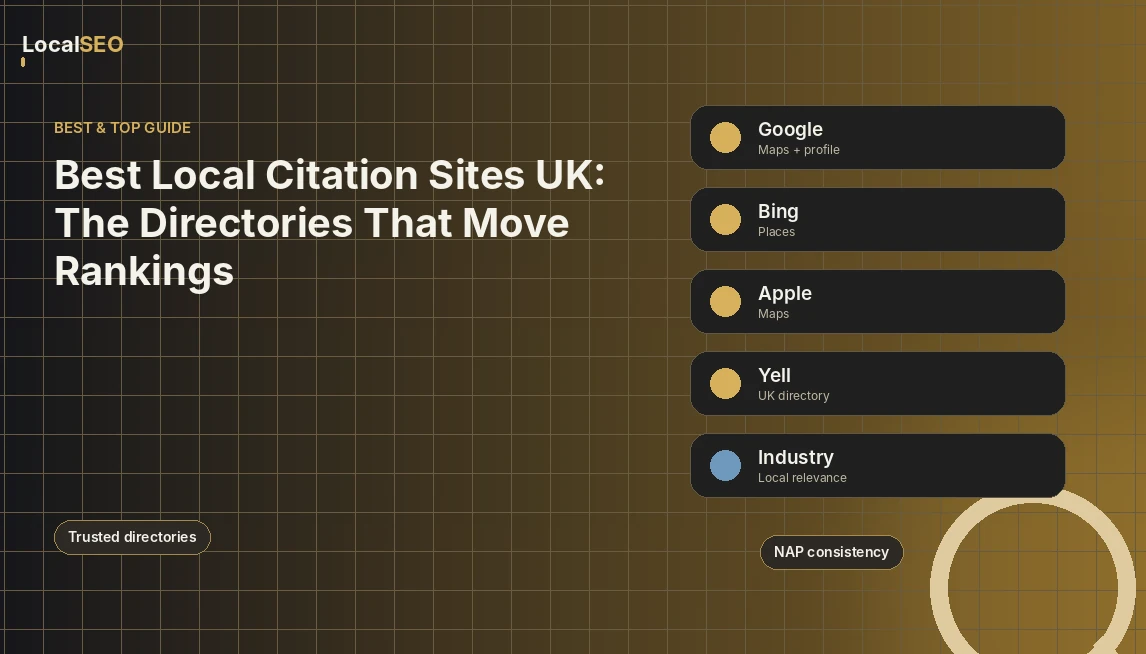
Best Local Citation Sites UK: The Directories That Move Rankings
A ranked, honest guide to the best local citation sites UK businesses should list on to improve local search visibility.
Read the guide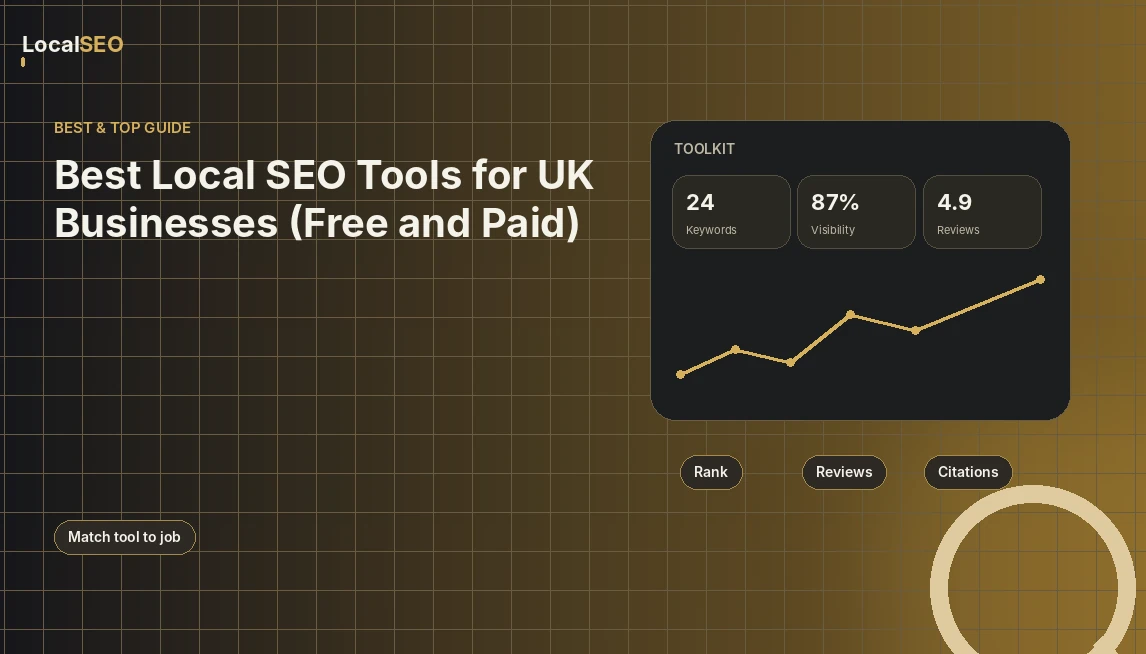
Best Local SEO Tools for UK Businesses (Free and Paid)
A ranked guide to the best local SEO tools for UK businesses, covering free and paid options for every job from rank tracking to reviews.
Read the guideSee exactly where you're losing local customers
Get a free, no-obligation local SEO audit and a clear plan to climb the map pack.
- A clear picture of where you rank locally today
- The quickest wins to climb the map pack
- How you compare to nearby competitors
- No obligation, no hard sell
Prefer to talk? Call us directly.
+44 7423 614766