Meridian Fitness UK: when technical SEO turned into a website revamp
I started with technical SEO and ended up proposing a full website revamp. Here is what I found, why I asked for a bigger change, and how I kept the campaign moving after launch.
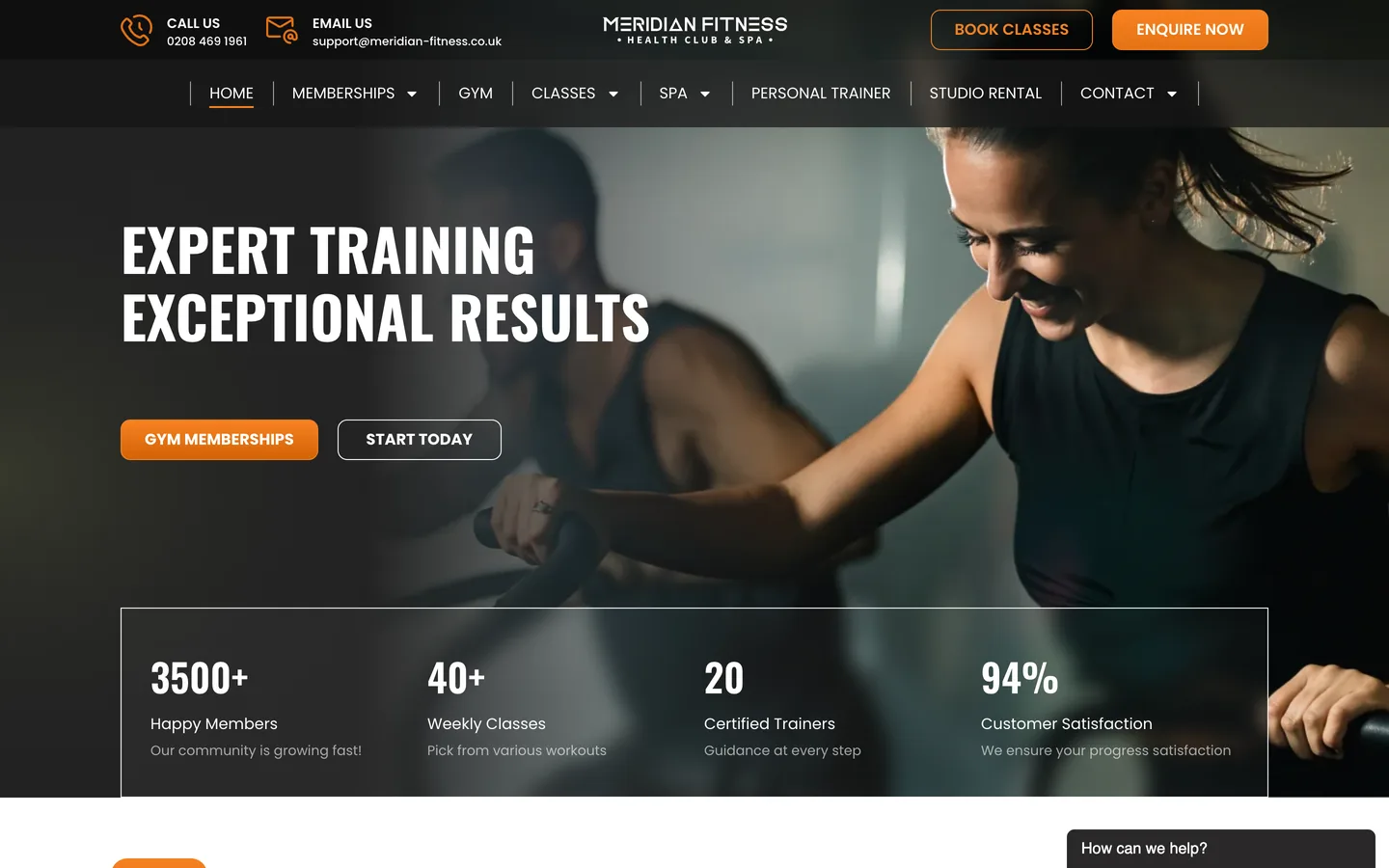
View the full-page screenshotHide the full-page screenshot

Full homepage, captured 17 October 2026. Scroll inside this panel to see the whole page.
I started this project with a list of technical SEO problems. Within a short time I was asking a much bigger question: if more people found this website tomorrow, would it give them a good experience?
That question changed the direction of the work. I could see content opportunities, but I could also see a slow website and a user experience that needed attention. Publishing more articles would not have solved everything I had found.
So I went to my manager with a proposal to revamp the website, and I offered to own the SEO direction and work alongside the designer and developer to deliver it.
The business and the project
Meridian Fitness is a fitness business in Greenwich, London. Its services include gym memberships, personal training, and fitness classes. That range gave us several areas to build useful content around and several ways to reach people through search.
When I started, I saw a business with a lot of potential and a website that needed serious attention. There were many technical SEO issues, large content gaps, slow loading, and a user experience that made the site harder to use than it needed to be.
I began with the technical problems. The further I explored, the clearer it became that technical fixes alone would not be enough.
What I found: technical problems and content gaps
The website had several weaknesses at the same time. There were technical issues to address and too many extra URLs. The content also did not cover enough of the subjects potential customers wanted to understand.
Someone researching a gym often has questions before they are ready to join. They may want to learn how personal training works, understand the different classes, or simply find information that helps them get started.
A content gap means people are looking for information the website does not yet provide. It is easy to assume a website has enough content because it has several service pages. Those pages may still not answer the questions people ask before they choose.
Before expanding the content, I checked the loading speed and the overall experience. Both needed work. Bringing more visitors to a website only solves part of the problem if those visitors still find it difficult to use.
Two different kinds of problem
Technical work addressed problems with the website itself. Content work helped us offer more useful information. Seeing both early is what helped me understand the real size of the project.
Why I proposed a full website revamp
I spoke to my manager and explained that I wanted to revamp the website. I wanted SEO, design, and development working towards the same goal: a stronger website that people could find and use more easily.
This was a bigger decision than changing a few headings or adding more articles. It meant rebuilding and republishing an improved website with a designer and a developer.
I was confident in the direction. I told my manager that I expected traffic to grow rather than fall after the work, and that reflected my confidence in this specific project and the opportunities I could see in it.
By user experience, I mean how easy and comfortable a website feels to use. Can a visitor understand the page? Can they find what they need? Is the next step clear? A gym website has to serve different people. Someone who already knows the business may want membership information quickly, while a first-time visitor may need more explanation before they feel ready to get in touch.
That is how I framed the proposal. The revamp was an investment in the place where all our future SEO visitors would arrive. I wanted the website work and the traffic-building work to support each other.
Working with the designer and developer
I collaborated with the UI/UX designer and the developer throughout the revamp. The designer contributed the design and user experience work. The developer handled the build and publication. I contributed the SEO direction and connected it to the wider website project.
I did not do every part of the build myself, and the collaboration deserves recognition. My responsibility was to keep SEO involved as the website changed, so the new experience would help visitors understand the business, explore its services, and find their next step.
My part was to recognise that the website needed more than routine SEO changes, then help turn that finding into a project we could actually deliver. For me this was a lesson in communication as much as SEO. Finding a problem is one step. Helping a team understand it and work towards a solution is another.
After launch: link building around service keywords
Once the revamped website was published, I kept the momentum going through three main areas. The first was links.
I focused my link-building work on important commercial keywords, meaning searches connected to services a potential customer might want to buy. A general fitness question and a search for a personal trainer have different purposes. The first person may want information; the second may be closer to choosing a provider.
My work included outreach, HARO, and three-way link exchanges, also called ABC exchanges. HARO was a way to respond to requests from journalists looking for sources or comments. An ABC exchange involved links between three websites rather than a simple two-website swap. I also researched competitors to find opportunities, and in some cases secured useful links from competitors themselves.
This required regular research and follow-up. I treated link building as an ongoing part of the campaign, alongside the website improvements and the content publishing.
What I have not included
My account includes links gained from competitors, but I have not listed named placements or a link count here, because those records are not supplied with this case study.
Making the personal trainers more visible
I wanted people to see the real professionals behind Meridian Fitness. The personal trainers were an important part of that.
I created profiles for trainers and started building their presence across platforms including LinkedIn, Quora, Pinterest, Instagram, and Facebook. A business name on its own does not tell the full story of the people working there. Trainer profiles gave us a way to put people, roles, and professional identity in front of an audience.
My aim was to support the ideas behind E-E-A-T: experience, expertise, authority, and trust. In practical terms, I wanted the business's real knowledge and experience to be easier for people to recognise, rather than leaving the website feeling separate from its trainers.
I am not claiming that posting on a particular social platform directly caused a ranking increase. It was one part of how I presented the business and the professionals connected to it.
Filling the content gaps with daily publishing
I started publishing blog content daily to cover subjects missing from the website. Each article needed a clear purpose: answer a question, explain a subject, or help someone understand their options.
I wanted the website to be useful before someone was ready to join a gym or contact a trainer. Helpful information gave us more opportunities to reach people during that research stage.
The daily routine helped maintain momentum, and content became ongoing work with a purpose rather than something published only when there was spare time. The schedule helped me make progress, but the schedule was never the point. The reason for publishing was to cover missing information.
Simple language mattered here too. A person new to fitness should be able to read an explanation without needing to understand industry terms first. Useful content starts with the reader's question and gives them an answer they can follow.
A dedicated guide and resource section
Alongside the blog, I created a dedicated guide and resource area. It gave us a place to publish longer content, including how-to guides, list articles, and best or top-style guides.
The blog helped us cover questions regularly. The resource section gave us space to explore wider subjects in more detail. A focused question may need a short article. A broader subject may need a guide with several sections.
List articles can make information easier to scan. A how-to guide can explain a process step by step. A best or top-style article needs a clear purpose so the reader understands what the list helps them decide. Together, these formats helped organise information in ways people could follow and return to.
Keeping the campaign moving
The revamp was an important milestone, but the daily work continued after launch. I kept working on links, content, and professional profiles with a steady rhythm.
Each area supported the others. The website had a stronger foundation. The content covered more questions. Link building focused on important commercial areas. The trainer profiles made the people behind the business more visible. My role was to connect these activities and keep them moving consistently.
What happened, and what I learned
Within around one month of this focused work, I saw traffic rise sharply. The management team was very satisfied with the progress.
Several changes were happening during the campaign, so I describe the growth as the result of the combined work. I cannot separate the contribution of each activity from this account alone.
Being precise about the one month
The one-month point describes when I noticed strong growth during the focused work. It should not be read as a claim that the full audit, redesign, build, and every part of the campaign were completed within a single month.
The traffic increase was encouraging because it followed a period of connected work. Traffic alone does not tell us how many people became members, and I have not added a membership or revenue claim without those figures.
This project reinforced an important lesson for me: SEO needs a strong website behind it. Technical work, useful content, links, and the visitor experience all deserve attention. My contribution was to recognise the wider problem, raise the need for a revamp, collaborate with the designer and developer, and maintain the SEO work after launch.
The phrases I worked towards
These are the keyword phrases I worked towards on this project, reported from my own account of the campaign. Historical ranking positions and dates are not supplied with this case study, so there is no ranking chart here. The phrases are reproduced exactly as I recorded them.
Fitness and training
National phrases I targeted for the gym and personal training side of the business.
- best personal trainer in UK
- weight lose
Greenwich and local
Local phrases tied to the gym's location in Greenwich, London.
- Top Gym in Greenwich UK
Keywords reported by Nazir Abbas. Historical positions and dates are not supplied, so this section shows the phrases only. If ranking records become available, verified charts can be added here.
About this case study
This is my own first-person account of the project. The reported traffic growth and management feedback come from me. No analytics figures, exact dates, ranking positions, or booking and revenue results are supplied here, so none appear on this page. The homepage screenshot shows the site as it looks today and does not verify the historical work. Sources: Meridian Fitness UK website; Nazir Abbas on LinkedIn; my own project account.

Could your website be missing the same opportunities?
Your business may offer a good service while its website still leaves important questions unanswered. Slow pages, confusing design, and missing content all deserve a closer look. If you want a clearer understanding of where your website needs work, get in touch and we can discuss the problems, the opportunities, and a practical way forward.